I am in Boston for National Chinese Language Conference for 3 days. So I have a sub plan.
For April 8, Monday – B Day,
Chinese Level I (5th and 6th periods),
1) please show them the video and ask students to copy down the words and sentences while they are listening. You may need to pause the video for a couple of minutes for students to copy and then continue to play it.
2) After they watch the video for 1st time, please replay it again, and this time no pause, just let them listen watch the words and listen.
3) After the 2nd time watch the video, this time ask them to repeat aloud after the words and sentences after me in the video. (You may need to pause at the words and/or at sentences to give students time to repeat after me.)
4) Give the students 10-15 minutes to study the words and then give them half sheet lined-paper each and let them do the following quiz. (I didn’t print them out.)
Quiz - please write the English meaning to each word.
1. 老師lǎo shī
2. 星期xīng qī
3. 學生xué shēng
4. 數學shù xué
5. 很好玩hěn hǎo wán
6. 中文zhōng wén
7. 星期幾? xīng qī jǐ ?
8. 英文yīng wén
9. 科目kē mù
10. 很難hěn nán
11. 很簡單hěn jiǎn dān
12. 玩拼圖wán pīn tú
13. 打掃dǎ sǎo
Monday, April 8, 2013

Friday, March 29, 2013
Thursday, March 28, 2013
三月二十八日星期四- March 28, Thursday- B Day
FOR CHINESE LEVEL I ABSENT STUDENTS- 1) please copy down the new words onto your notes and show the teacher your notes; 2) come in to make up the quiz.
Today for Chinese Level I we learned the following new words-
做數學zuò shù xué = to do math
玩拼圖 wán pīn tú = to play puzzles
打掃dǎ sǎo = to clean
**extension words (that students asked to know)
房間fáng jiān = room/bedroom
好玩 hǎo wán= have fun
花好多時間 huā hǎo duō shí jiān= spend lots of time
很難 hěn nán = difficult
無聊 wú liáo= bored/boring
We used small whiteboard and the ribbon game to practice the words. After the practice we watched a powerpoint (through a Reading A-Z book named Carlos and his teacher Carlos和他的老師; due to the copyright issue, I am not able to post the powrpoint online at this moment until I receive their response and permission about the copyright ) At the end of the classroom we did a 7-words quiz. And it seems more than 80% of students get 80% right.
 ===========
老師 lǎo shī= teacher
**extension words (that students asked to know)
房間fáng jiān = room/bedroom
好玩 hǎo wán= have fun
花好多時間 huā hǎo duō shí jiān= spend lots of time
很難 hěn nán = difficult
無聊 wú liáo= bored/boring
We used small whiteboard and the ribbon game to practice the words. After the practice we watched a powerpoint (through a Reading A-Z book named Carlos and his teacher Carlos和他的老師; due to the copyright issue, I am not able to post the powrpoint online at this moment until I receive their response and permission about the copyright ) At the end of the classroom we did a 7-words quiz. And it seems more than 80% of students get 80% right.

老師 lǎo shī= teacher
學生 xué shēng = student
星期xīng qī = week/weekday
星期幾? xīng qī jǐ= what day?
星期一 = Monday
星期二 = Tuesday
星期三 = Wednesday
星期四 = Thursday
星期五 = Friday
星期六 = Saturday
星期天 = Sunday
星期xīng qī = week/weekday
星期幾? xīng qī jǐ= what day?
星期一 = Monday
星期二 = Tuesday
星期三 = Wednesday
星期四 = Thursday
星期五 = Friday
星期六 = Saturday
星期天 = Sunday
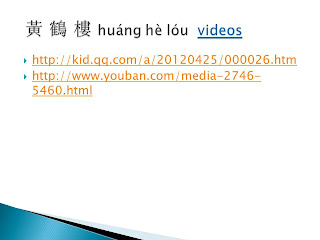
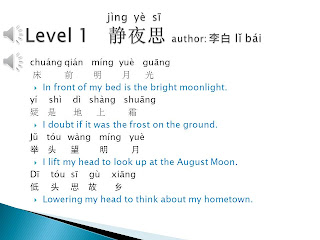
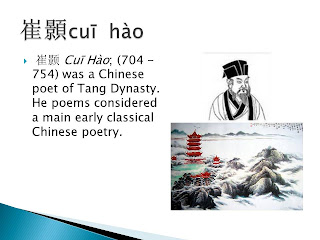
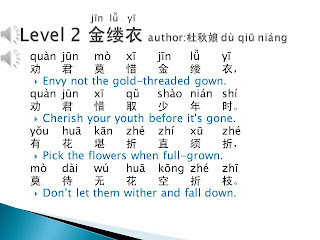
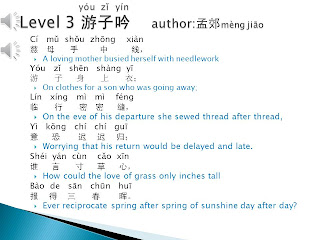
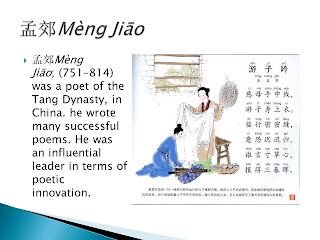
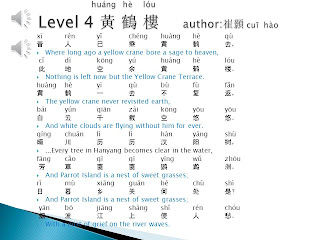
BYU LANGUAGE FAIR - POEM
YOU MAY CLICK THE PICTURES TO SEE THE POEMS OR CLICK THE WORD "POWERPOINT" TO ACCESS THE POEMS WHICH INCLUDES VIDEOS.



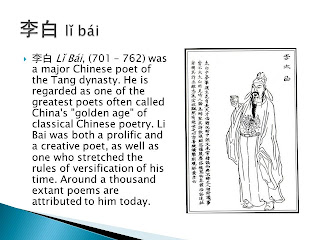


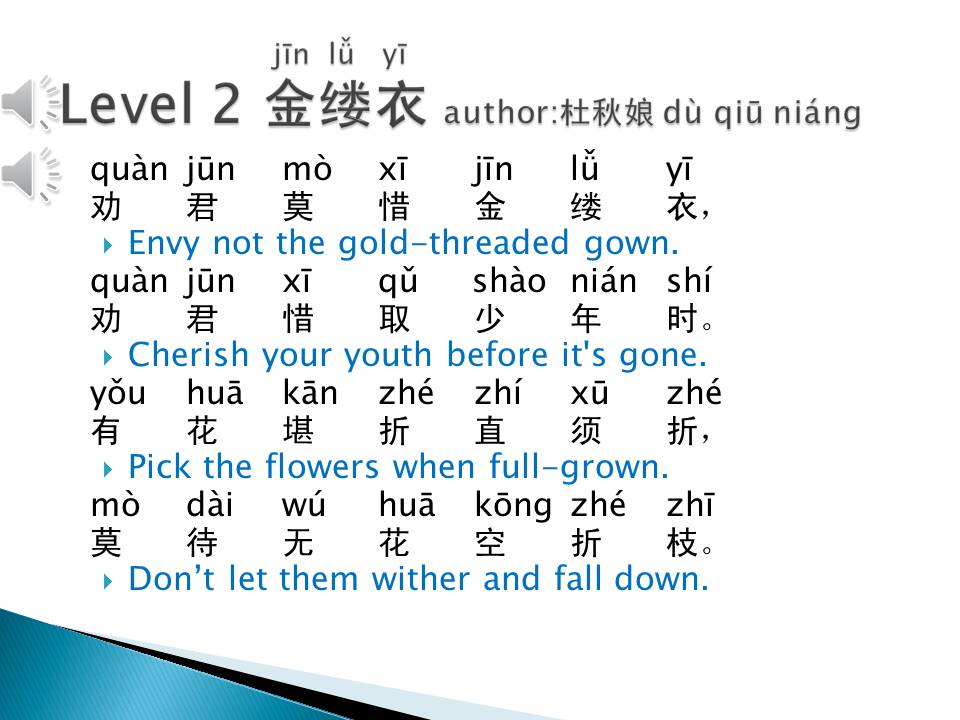


Wednesday, March 27, 2013
三月二十七日星期三 - March 27, Wednesday - A Day
FOR CHINESE LEVEL I ABSENT STUDENTS- 1) please copy down the new words onto your notes and show the teacher your notes; 2) come in to make up your quiz.
FOR CHINESE LEVEL II & III ABSENT STUDENTS - 1) please copy down the new words onto your notes and show the teacher your notes; 2) translate the story and show the teacher your translation.
FOR CHINESE LEVEL II & III ABSENT STUDENTS - 1) please copy down the new words onto your notes and show the teacher your notes; 2) translate the story and show the teacher your translation.
Today for Chinese Level I we learned the following new words-
做數學zuò shù xué = to do math
玩拼圖 wán pīn tú = to play puzzles
打掃dǎ sǎo = to clean
**extension words (that students asked to know)
房間fáng jiān = room/bedroom
好玩 hǎo wán= have fun
花好多時間 huā hǎo duō shí jiān= spend lots of time
很難 hěn nán = difficult
無聊 wú liáo= bored/boring
We used small whiteboard and the ribbon game to practice the words. After the practice we watched a powerpoint (through a Reading A-Z book named Carlos and his teacher Carlos和他的老師; due to the copyright issue, I am not able to post the powrpoint online at this moment until I receive their response and permission about the copyright ) At the end of the classroom we did a 7-words quiz. And it seems more than 80% of students get 80% right.
===========
老師 lǎo shī= teacher
**extension words (that students asked to know)
房間fáng jiān = room/bedroom
好玩 hǎo wán= have fun
花好多時間 huā hǎo duō shí jiān= spend lots of time
很難 hěn nán = difficult
無聊 wú liáo= bored/boring
We used small whiteboard and the ribbon game to practice the words. After the practice we watched a powerpoint (through a Reading A-Z book named Carlos and his teacher Carlos和他的老師; due to the copyright issue, I am not able to post the powrpoint online at this moment until I receive their response and permission about the copyright ) At the end of the classroom we did a 7-words quiz. And it seems more than 80% of students get 80% right.
老師 lǎo shī= teacher
學生 xué shēng = student
星期xīng qī = week/weekday
星期幾? xīng qī jǐ= what day?
星期一 = Monday
星期二 = Tuesday
星期三 = Wednesday
星期四 = Thursday
星期五 = Friday
星期六 = Saturday
星期天 = Sunday
For Chinese Level II and III -
We learned the following words -
對...不熟duì ...bù shoú = not be familiar with
剛剛gāng gāng = just now
參觀cān guān = to visit
很遠 hěn yuǎn = very far
很近 hěn jìn = very close
====
開車kāi chē = to drive
載 zǎi = to give a ride
博物館bó wù guǎn = musuem
前qián = be in front of, before
中學 zhōng xué = middle school
怎麼走?zěn me zǒu? = how to get to ...?
你對什麼不熟?nǐ duì shí me bù shoú ? = What are you not familiar with?
我對法文不熟wǒ duì fǎ wén bù shoú 。= I am not familiar with French.
我對中國不熟。wǒ duì zhōng guó bù shoú 。= I am not familiar with China.
你剛剛有沒有哭?nǐ gāng gāng yǒu méi yǒu kū ? = Did you cry just now?
我剛剛沒有哭wǒ gāng gāng méi yǒu kū 。= I did not cry just now.
你剛剛有沒有遲到?nǐ gāng gāng yǒu méi yǒu chí dào ? = Were you late just now?
我剛剛有遲到。wǒ gāng gāng yǒu chí dào = I was late just now.
你有沒有參觀過博物館? nǐ yǒu méi yǒu cān guān guò bó wù guǎn ? = Have you ever visited the museum?
我有參觀過博物館。wǒ yǒu cān guān guò bó wù guǎn = I have visited the museum.
你有沒有參觀過Syracuse高中? nǐ yǒu méi yǒu cān guān guò Syracusegāo zhōng ?= Have you ever visited Syracuse High School.
我沒有參觀過Syracuse 高中。wǒ méi yǒu cān guān guò Syracuse gāo zhōng 。= I haven't visited Syracuse High School.
你知道恐龍博物館怎麼走嗎? nǐ zhī dào kǒng lóng bó wù guǎn zěn me zǒu ma ?= Do you know how to get to the Dinosaur Museum.
對不起,我不知道恐龍博物館怎麼走。duì bù qǐ ,wǒ bù zhī dào kǒng lóng bó wù guǎn zěn me zǒu 。= I am sorry, I don't know how to get to the Dinosaur Museum.
鹽湖城離Syracuse很遠嗎?yán hú chéng lí Syracusehěn yuǎn ma ?
= Is it far from Salt Lake city to Syracuse?
鹽湖城離Syracuse不很遠。yán hú chéng lí Syracuse bù hěn yuǎn 。= It's not far from Salt Lake City to Syracuse.
Syracuse 初中離Walt-Mart很近嗎?Syracuse chū zhōng lí Walt-Marthěn jìn ma ?
= Is it very close from Syracuse Jr. to Walt-mart?
對! Syracuse 初中離Walt-Mart很近。duì ! Syracuse chū zhōng lí Walt-Marthěn jìn = Yes, it's very close from Syracuse Jr. to Walt-mart.

星期xīng qī = week/weekday
星期幾? xīng qī jǐ= what day?
星期一 = Monday
星期二 = Tuesday
星期三 = Wednesday
星期四 = Thursday
星期五 = Friday
星期六 = Saturday
星期天 = Sunday
For Chinese Level II and III -
We learned the following words -
對...不熟duì ...bù shoú = not be familiar with
剛剛gāng gāng = just now
參觀cān guān = to visit
很遠 hěn yuǎn = very far
很近 hěn jìn = very close
====
開車kāi chē = to drive
載 zǎi = to give a ride
博物館bó wù guǎn = musuem
前qián = be in front of, before
中學 zhōng xué = middle school
怎麼走?zěn me zǒu? = how to get to ...?
你對什麼不熟?nǐ duì shí me bù shoú ? = What are you not familiar with?
我對法文不熟wǒ duì fǎ wén bù shoú 。= I am not familiar with French.
我對中國不熟。wǒ duì zhōng guó bù shoú 。= I am not familiar with China.
你剛剛有沒有哭?nǐ gāng gāng yǒu méi yǒu kū ? = Did you cry just now?
我剛剛沒有哭wǒ gāng gāng méi yǒu kū 。= I did not cry just now.
你剛剛有沒有遲到?nǐ gāng gāng yǒu méi yǒu chí dào ? = Were you late just now?
我剛剛有遲到。wǒ gāng gāng yǒu chí dào = I was late just now.
你有沒有參觀過博物館? nǐ yǒu méi yǒu cān guān guò bó wù guǎn ? = Have you ever visited the museum?
我有參觀過博物館。wǒ yǒu cān guān guò bó wù guǎn = I have visited the museum.
你有沒有參觀過Syracuse高中? nǐ yǒu méi yǒu cān guān guò Syracusegāo zhōng ?= Have you ever visited Syracuse High School.
我沒有參觀過Syracuse 高中。wǒ méi yǒu cān guān guò Syracuse gāo zhōng 。= I haven't visited Syracuse High School.
你知道恐龍博物館怎麼走嗎? nǐ zhī dào kǒng lóng bó wù guǎn zěn me zǒu ma ?= Do you know how to get to the Dinosaur Museum.
對不起,我不知道恐龍博物館怎麼走。duì bù qǐ ,wǒ bù zhī dào kǒng lóng bó wù guǎn zěn me zǒu 。= I am sorry, I don't know how to get to the Dinosaur Museum.
鹽湖城離Syracuse很遠嗎?yán hú chéng lí Syracusehěn yuǎn ma ?
= Is it far from Salt Lake city to Syracuse?
鹽湖城離Syracuse不很遠。yán hú chéng lí Syracuse bù hěn yuǎn 。= It's not far from Salt Lake City to Syracuse.
Syracuse 初中離Walt-Mart很近嗎?Syracuse chū zhōng lí Walt-Marthěn jìn ma ?
= Is it very close from Syracuse Jr. to Walt-mart?
對! Syracuse 初中離Walt-Mart很近。duì ! Syracuse chū zhōng lí Walt-Marthěn jìn = Yes, it's very close from Syracuse Jr. to Walt-mart.

Tuesday, March 26, 2013
三月二十六日星期二 March 25, Tuesday - B Day
FOR CHINESE LEVEL II & III ABSENT STUDENTS - 1) Copy down the words onto your notes and show the teacher your notes when you come back, 2) come at advisory time, lunch time, or after school before 4pm and take a quiz for today's word when you come back to school.
For Chinese Level I students, we learned 4 words today -
老師 lǎo shī= teacher
學生 xué shēng = student
星期xīng qī = week/weekday
星期幾? xīng qī jǐ= what day?
We first used TPR to introduced the words, and then we played "Ribbon game" to practice the words. The teacher shook the first person of each row and asked 什麼是老師shen me shì lǎo shī ? and the person answered "teacher"; and then the person shook the hand of 2nd person of the row and asked 什麼是老師shen me shì lǎo shī ? And the person answered "teacher"; the 2nd person shook the hand of the 3rd person of the row and asked....Continue the step until the last person of the row answer the question. And the last person of the row has to run to the teacher and ask the teacher 什麼是老師shen me shì lǎo shī ?. The 1st one who runs to the teacher and asks the question receives 2 points for their row; other rows who are not the fastest one will receive 1 pt for their rows.
and the small whiteboards as well. Of course we used sentences to familiar with these words like..
什麼是學生shen me shì xué shēng? = What is " 學生xué shēng"?
什麼是星期 shen me shì xīng qī ?= What is "星期xīng qī "?
今天是星期幾jīn tiān shì xīng qī jǐ ? = What day is today?
昨天是星期幾zuó tiān shì xīng qī jǐ = What day is yesterday?
明天是星期幾míng tiān shì xīng qī jǐ = What day is tomorrow?
Mrs. Duke是老師還是學生shì lǎo shī hái shì xué shēng? = Mrs. Duke is a teacher or a student?
For Chinese Level I students, we learned 4 words today -
老師 lǎo shī= teacher
學生 xué shēng = student
星期xīng qī = week/weekday
星期幾? xīng qī jǐ= what day?
We first used TPR to introduced the words, and then we played "Ribbon game" to practice the words. The teacher shook the first person of each row and asked 什麼是老師shen me shì lǎo shī ? and the person answered "teacher"; and then the person shook the hand of 2nd person of the row and asked 什麼是老師shen me shì lǎo shī ? And the person answered "teacher"; the 2nd person shook the hand of the 3rd person of the row and asked....Continue the step until the last person of the row answer the question. And the last person of the row has to run to the teacher and ask the teacher 什麼是老師shen me shì lǎo shī ?. The 1st one who runs to the teacher and asks the question receives 2 points for their row; other rows who are not the fastest one will receive 1 pt for their rows.
and the small whiteboards as well. Of course we used sentences to familiar with these words like..
什麼是學生shen me shì xué shēng? = What is " 學生xué shēng"?
什麼是星期 shen me shì xīng qī ?= What is "星期xīng qī "?
今天是星期幾jīn tiān shì xīng qī jǐ ? = What day is today?
昨天是星期幾zuó tiān shì xīng qī jǐ = What day is yesterday?
明天是星期幾míng tiān shì xīng qī jǐ = What day is tomorrow?
Mrs. Duke是老師還是學生shì lǎo shī hái shì xué shēng? = Mrs. Duke is a teacher or a student?
Ms. Weaver是老師還是學生shì lǎo shī hái shì xué shēng? = Ms. Weaver is a teacher or a student?
Jori是老師還是學生 shì lǎo shī hái shì xué shēng ? = Jori is a teacher or a student?
Monday, March 25, 2013
三月二十五日星期一 - March 25, Monday - A Day
FOR CHINESE LEVEL II & III ABSENT STUDENTS - 1) Copy down the words onto your notes and show the teacher your notes when you come back, 2) come at advisory time, lunch time, or after school before 4pm and take a quiz for today's word when you come back to school.
FOR CHINESE LEVEL I ABSENT STUDENTS - 1) Copy down the words onto your notes and show the teacher your notes when you come back,
For Chinese Level I students, we learned 4 words today -
老師 lǎo shī= teacher
學生 xué shēng = student
星期xīng qī = week/weekday
星期幾? xīng qī jǐ= what day?
We first used TPR to introduced the words, and then we played "Ribbon game" to practice the words. The teacher shook the first person of each row and asked 什麼是老師shen me shì lǎo shī ? and the person answered "teacher"; and then the person shook the hand of 2nd person of the row and asked 什麼是老師shen me shì lǎo shī ? And the person answered "teacher"; the 2nd person shook the hand of the 3rd person of the row and asked....Continue the step until the last person of the row answer the question. And the last person of the row has to run to the teacher and ask the teacher 什麼是老師shen me shì lǎo shī ?. The 1st one who runs to the teacher and asks the question receives 2 points for their row; other rows who are not the fastest one will receive 1 pt for their rows.
and the small whiteboards as well. Of course we used sentences to familiar with these words like..
什麼是學生shen me shì xué shēng? = What is " 學生xué shēng"?
什麼是星期 shen me shì xīng qī ?= What is "星期xīng qī "?
今天是星期幾jīn tiān shì xīng qī jǐ ? = What day is today?
昨天是星期幾zuó tiān shì xīng qī jǐ = What day is yesterday?
明天是星期幾míng tiān shì xīng qī jǐ = What day is tomorrow?
Mrs. Duke是老師還是學生shì lǎo shī hái shì xué shēng? = Mrs. Duke is a teacher or a student?
The words we learned for Chinese Level II & III are the followings:
開車 kāi chē = to drive
載zǎi = to give a ride/ capacity
中學zhōng xué = middle school
前qián= before/in front of/ahead/in advance
博物館bó wù guǎn = museum
怎麼走?zěn me zǒu ?= how to get there
去...怎麼走?qù ...zěn me zǒu ? = how to get to ......
First we used TPRS to introduced the new words and then we played "Robbin Game". The teacher shook the first person of each row and asked 開車的英文怎麼說 kāi chē de yīng wén zěn me shuō? and the person answered "to drive"; and then the person shook the hand of the 2nd person of the row and asked 開車的英文怎麼說kāi chē de yīng wén zěn me shuō? and the person answered "to drive"; the 2nd person shook the 3rd person of the row and asked....Continue the step until the last person of the row answer the question. And then the last person of the row has to run to the teacher and ask the teacher 開車的英文怎麼說kāi chē de yīng wén zěn me shuō? The 1st one who runs to the teacher and asks the question receives two points for their row; other rows who are not the fastest one still come to the teacher and asks her the question to receive 1 pt for their row. We continued the game with different words like
載zǎi 的英文怎麼說 de yīng wén zěn me shuō?
中學zhōng xué的英文怎麼說de yīng wén zěn me shuō?
前qián的英文怎麼說de yīng wén zěn me shuō?
博物館bó wù guǎn的英文怎麼說de yīng wén zěn me shuō?
怎麼走zěn me zǒu的英文怎麼說de yīng wén zěn me shuō ?
And then we used questions like ..
The teacher asked the 1st person the question - 恐龍博物館怎麼走? kǒng lóng bó wù guǎn zěn me zǒu ? And the 2nd person answered the question; next the person asked the 3rd person the same question....After we practiced all the words and sentences, we did a quick quiz with these six words.
Next we acted out a story about Jet Li. --

FOR CHINESE LEVEL I ABSENT STUDENTS - 1) Copy down the words onto your notes and show the teacher your notes when you come back,
For Chinese Level I students, we learned 4 words today -
老師 lǎo shī= teacher
學生 xué shēng = student
星期xīng qī = week/weekday
星期幾? xīng qī jǐ= what day?
We first used TPR to introduced the words, and then we played "Ribbon game" to practice the words. The teacher shook the first person of each row and asked 什麼是老師shen me shì lǎo shī ? and the person answered "teacher"; and then the person shook the hand of 2nd person of the row and asked 什麼是老師shen me shì lǎo shī ? And the person answered "teacher"; the 2nd person shook the hand of the 3rd person of the row and asked....Continue the step until the last person of the row answer the question. And the last person of the row has to run to the teacher and ask the teacher 什麼是老師shen me shì lǎo shī ?. The 1st one who runs to the teacher and asks the question receives 2 points for their row; other rows who are not the fastest one will receive 1 pt for their rows.
and the small whiteboards as well. Of course we used sentences to familiar with these words like..
什麼是學生shen me shì xué shēng? = What is " 學生xué shēng"?
什麼是星期 shen me shì xīng qī ?= What is "星期xīng qī "?
今天是星期幾jīn tiān shì xīng qī jǐ ? = What day is today?
昨天是星期幾zuó tiān shì xīng qī jǐ = What day is yesterday?
明天是星期幾míng tiān shì xīng qī jǐ = What day is tomorrow?
Mrs. Duke是老師還是學生shì lǎo shī hái shì xué shēng? = Mrs. Duke is a teacher or a student?
Ms. Weaver是老師還是學生shì lǎo shī hái shì xué shēng? = Ms. Weaver is a teacher or a student?
Jori是老師還是學生 shì lǎo shī hái shì xué shēng ? = Jori is a teacher or a student?
開車 kāi chē = to drive
載zǎi = to give a ride/ capacity
中學zhōng xué = middle school
前qián= before/in front of/ahead/in advance
博物館bó wù guǎn = museum
怎麼走?zěn me zǒu ?= how to get there
去...怎麼走?qù ...zěn me zǒu ? = how to get to ......
First we used TPRS to introduced the new words and then we played "Robbin Game". The teacher shook the first person of each row and asked 開車的英文怎麼說 kāi chē de yīng wén zěn me shuō? and the person answered "to drive"; and then the person shook the hand of the 2nd person of the row and asked 開車的英文怎麼說kāi chē de yīng wén zěn me shuō? and the person answered "to drive"; the 2nd person shook the 3rd person of the row and asked....Continue the step until the last person of the row answer the question. And then the last person of the row has to run to the teacher and ask the teacher 開車的英文怎麼說kāi chē de yīng wén zěn me shuō? The 1st one who runs to the teacher and asks the question receives two points for their row; other rows who are not the fastest one still come to the teacher and asks her the question to receive 1 pt for their row. We continued the game with different words like
載zǎi 的英文怎麼說 de yīng wén zěn me shuō?
中學zhōng xué的英文怎麼說de yīng wén zěn me shuō?
前qián的英文怎麼說de yīng wén zěn me shuō?
博物館bó wù guǎn的英文怎麼說de yīng wén zěn me shuō?
怎麼走zěn me zǒu的英文怎麼說de yīng wén zěn me shuō ?
And then we used questions like ..
The teacher asked the 1st person the question - 恐龍博物館怎麼走? kǒng lóng bó wù guǎn zěn me zǒu ? And the 2nd person answered the question; next the person asked the 3rd person the same question....After we practiced all the words and sentences, we did a quick quiz with these six words.
Next we acted out a story about Jet Li. --

After we acted out the story, we asked TPR circling questions, and of course, we also used the "Ribbon game" again to let everyone have the chance to practice speaking about the story.
Subscribe to:
Posts (Atom)